
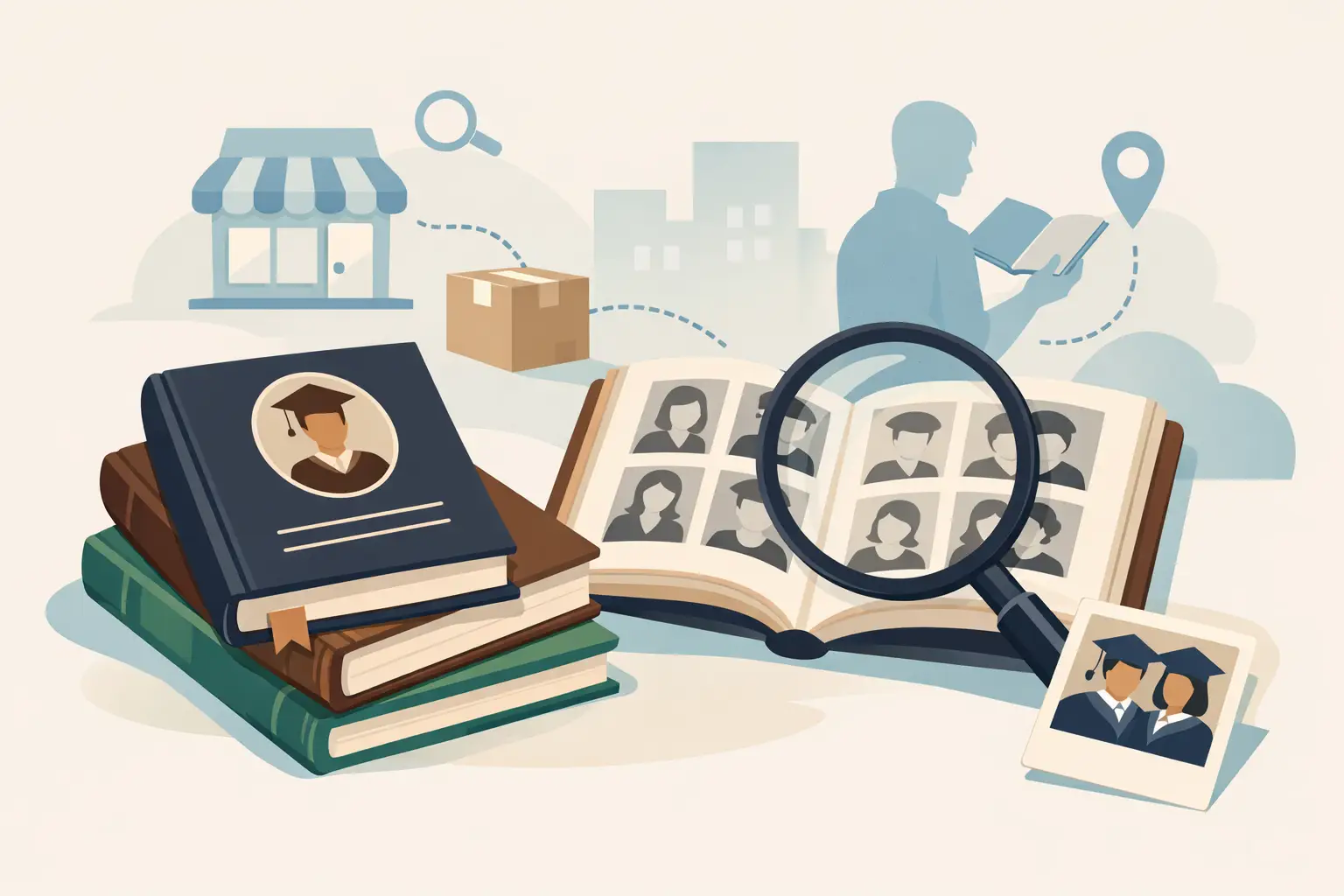
A yearbook can hold more than names and class portraits. It can preserve a vanished school building, a hometown nickname, a favorite typeface, a regional sports rivalry, or the small social details that make a particular era feel suddenly close again. If you are wondering where to buy vintage yearbooks, the answer depends on what kind of history you want to bring home - personal, decorative, regional, or collectible.
Some buyers are looking for their own school. Others want a book from a parent’s graduating class, a college tied to family history, or simply a beautifully worn volume with strong period design. Vintage yearbooks sit in a special corner of paper collecting because they are both intimate and public. They were made for a specific community, yet decades later they become remarkable artifacts of place and time.
Where to buy vintage yearbooks online
For most shoppers, online buying is the easiest place to start. It gives you range. You can search by school name, city, state, graduation year, mascot, or even broad phrases like high school annual or college yearbook. That matters because yearbooks were produced in thousands of editions, often with small print runs, and the right copy may be sitting far from the town where it was originally distributed.
Curated vintage shops are often the most pleasant way to shop if you care about condition, presentation, and the character of the piece itself. A seller with a strong eye for archival ephemera will usually note the publication year, school, wear, inscriptions, and any standout visual features such as embossed covers, art deco lettering, or mid-century photography. That curation helps if you are buying not just for information, but for display and long-term collecting.
Large resale marketplaces can also be useful because they cast a wide net. If your search is highly specific, these platforms may produce the only available copy for months. The trade-off is inconsistency. Listings range from carefully documented to very sparse, and condition language can be loose. A yearbook described as good vintage condition might still have detached pages, water staining, or heavy writing throughout.
Specialized vintage paper and ephemera sellers are worth watching too. Shops like these tend to understand what makes an old school annual desirable beyond simple age. They may notice regional interest, scarce schools, unusual cover art, or books tied to local history. For collectors who prefer thoughtfully chosen pieces over endless scrolling, this route often feels more rewarding.
Where to buy vintage yearbooks in person
Buying in person has its own appeal, especially with old paper goods. You can feel the binding, inspect the spine, flip through the signatures and advertisements, and decide whether the wear is charming or too far gone. That tactile part matters with yearbooks because condition is rarely just about cleanliness. It is about whether the book still feels intact and readable.
Antique malls and vintage shops sometimes carry yearbooks in the paper, book, or nostalgia sections. Selection can be unpredictable, but that is part of the pleasure. A local annual from the 1940s or a boldly graphic 1960s high school book may appear with no warning, often alongside postcards, commencement programs, and photo albums from the same region.
Estate sales are another strong source, particularly if you are shopping in the town or county connected to the school. Family paper archives often stay close to home. A box of books from one household may include several siblings’ yearbooks across different decades, which can be especially appealing if you like to see how a school evolved over time.
Used bookstores can be overlooked, but they sometimes receive yearbooks in donations or buyouts. College town shops are especially promising. The inventory may not be organized with yearbook collectors in mind, so it helps to ask. A dealer may have old annuals tucked behind local history shelves or stored in back rooms with school memorabilia.
The best place depends on what you want
If you are searching for a specific school and year, broad online marketplaces usually give you the best odds. If you care most about charm, design, and collectible presence, a curated vintage seller is often the better fit. If your interest is regional history, in-person shopping near the original school can turn up more relevant material.
That difference is worth keeping in mind. The best place to buy a 1957 yearbook from one exact Indiana high school is not always the best place to buy a handsome 1930s annual with decorative cover art for a library table or office shelf. One search is factual. The other is aesthetic.
What to check before you buy
A vintage yearbook does not need to be perfect to be worth having. In fact, a gift inscription, a penciled autograph, or a pressed flower tucked inside can add warmth and individuality. But there is a difference between lived-in character and damage that limits the book’s value or use.
Start with the basics. Confirm the school name, city, state, and publication year. Many schools shared names, and some annuals used titles more prominently than the school itself. A listing that says only The Echo or The Bulldog is not enough unless the rest of the details are present.
Then look closely at condition. Binding integrity matters most. Minor rubbing, edge wear, and age toning are common and often acceptable. Missing pages, loose signatures, mold odor, active moisture damage, or severe warping are more serious. If the listing photos do not show the spine, title page, and a few interior spreads, ask.
Personalization is another factor. Some buyers want untouched copies. Others actively prefer signed books because they preserve the social life of the object. There is no universal rule here. It depends on whether you are collecting for display, genealogy, nostalgia, or resale value.
How pricing works with vintage yearbooks
Yearbooks are often affordable compared with other vintage paper categories, but prices vary more than people expect. Age alone does not determine value. A 1920s volume from a small school in plain condition may sell for less than a vivid 1960s annual from a college with strong alumni interest.
Rarity, design, school prominence, region, and subject matter all affect price. Books from military academies, historically significant institutions, closed schools, and early colleges can command more attention. So can annuals with unusually attractive covers, strong period illustration, or local advertising sections that document a town’s commercial life.
Condition influences price, but so does demand. A well-preserved yearbook from an obscure school may linger. A worn copy from a beloved university may sell quickly. If you are buying for sentiment, the right copy is often worth more than its strict market value. If you are buying as a collector, patience usually helps.
Why vintage yearbooks appeal beyond nostalgia
Part of the charm is personal recognition, but yearbooks also work beautifully as historical objects. They capture hair, clothing, handwriting, clubs, jokes, ambitions, and local businesses in one place. Few printed items preserve everyday life so casually and so completely.
They also have decorative appeal. Cloth covers, stamped titles, school crests, sepia photography, and mid-century graphic layouts give many yearbooks a strong visual presence. Stacked with regional books or displayed on a shelf with framed school photographs and old pennants, they add a quieter kind of history to a room.
For gift buyers, they can be unexpectedly moving. A yearbook from a parent’s graduation year, a spouse’s hometown, or a grandparent’s college can feel deeply personal without being flashy. It is the kind of object that invites lingering conversation.
A few smart buying habits
Search with variations. Some listings use annual, school annual, commencement annual, or alumni book instead of yearbook. Schools may also be listed by mascot, abbreviated name, or older institutional title.
Save searches if you are looking for a particular edition. Many desirable yearbooks surface irregularly. The first one you see may be overpriced or poorly described, while a better copy appears weeks later.
Buy from sellers who understand old paper. A yearbook is heavier and more fragile than it looks, and poor packing can turn a sound binding into a split one during shipping. Shops that regularly handle archival ephemera, including carefully curated sellers such as Latent Hart, usually understand those details.
The pleasure of vintage yearbooks is that they are never just books. They are social records, design pieces, regional artifacts, and personal keepsakes all at once. The right copy may remind you of a place you knew, introduce you to one you never did, or simply bring a little more history and character into your home. When you find one that feels familiar before you even open it, that is usually the one worth keeping.