
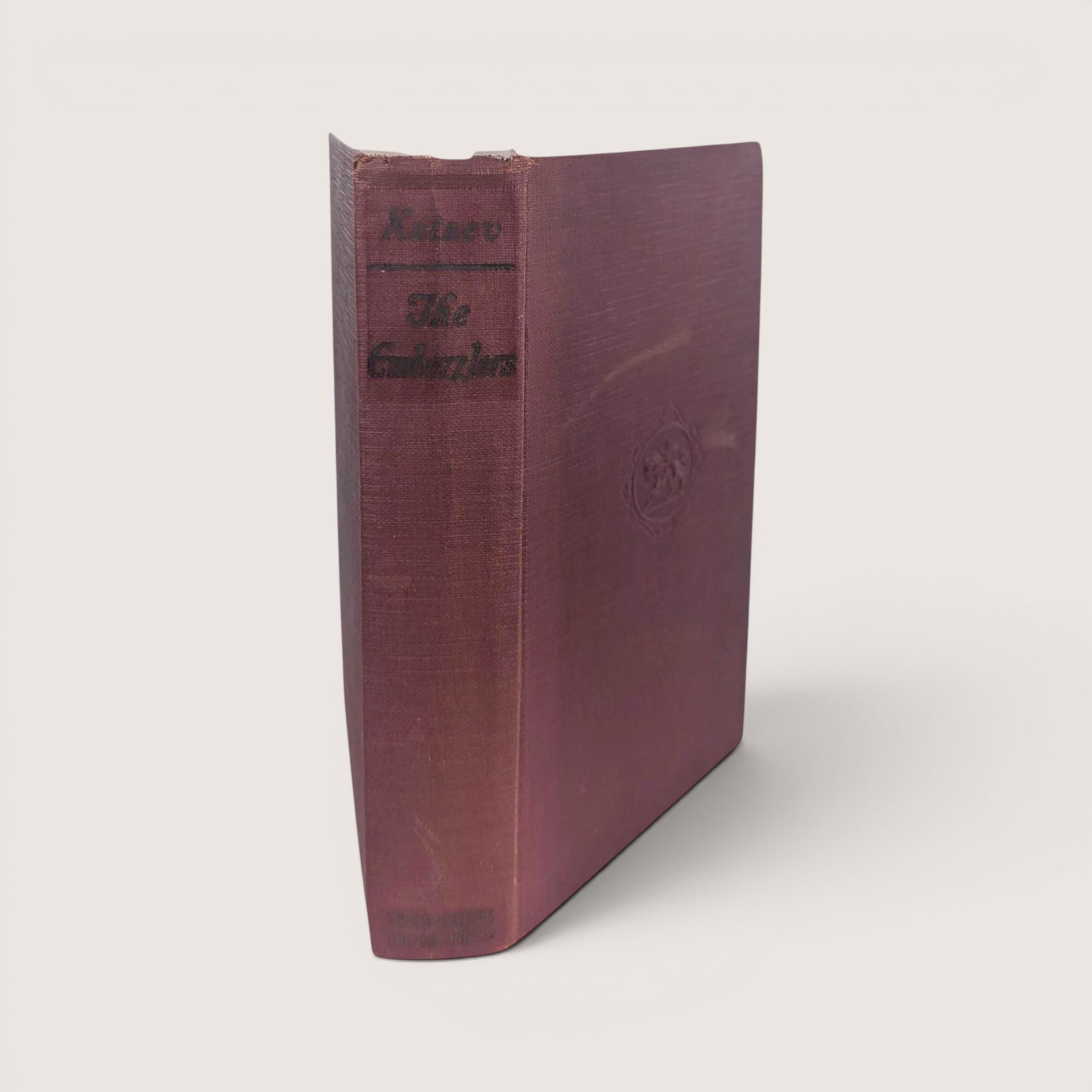
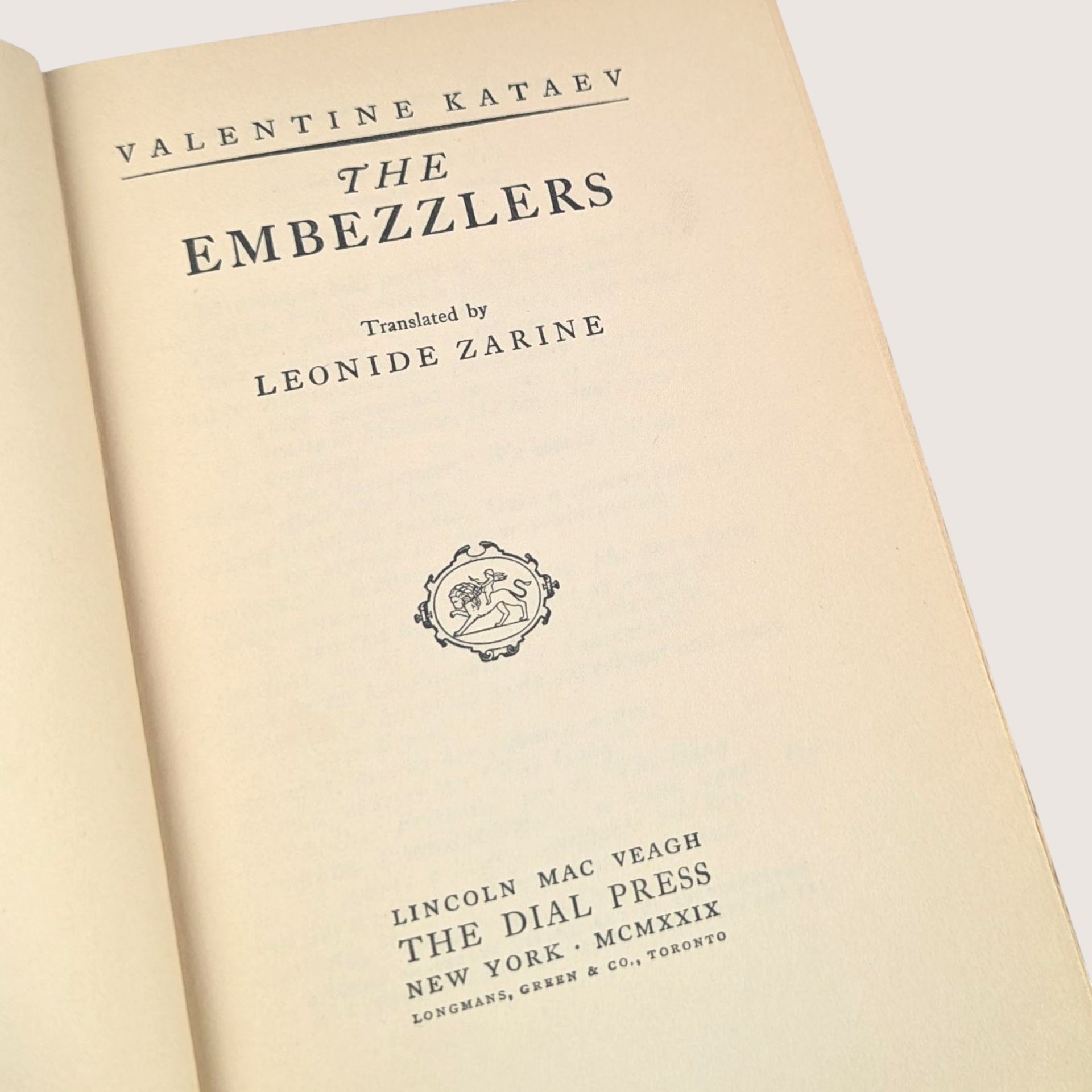
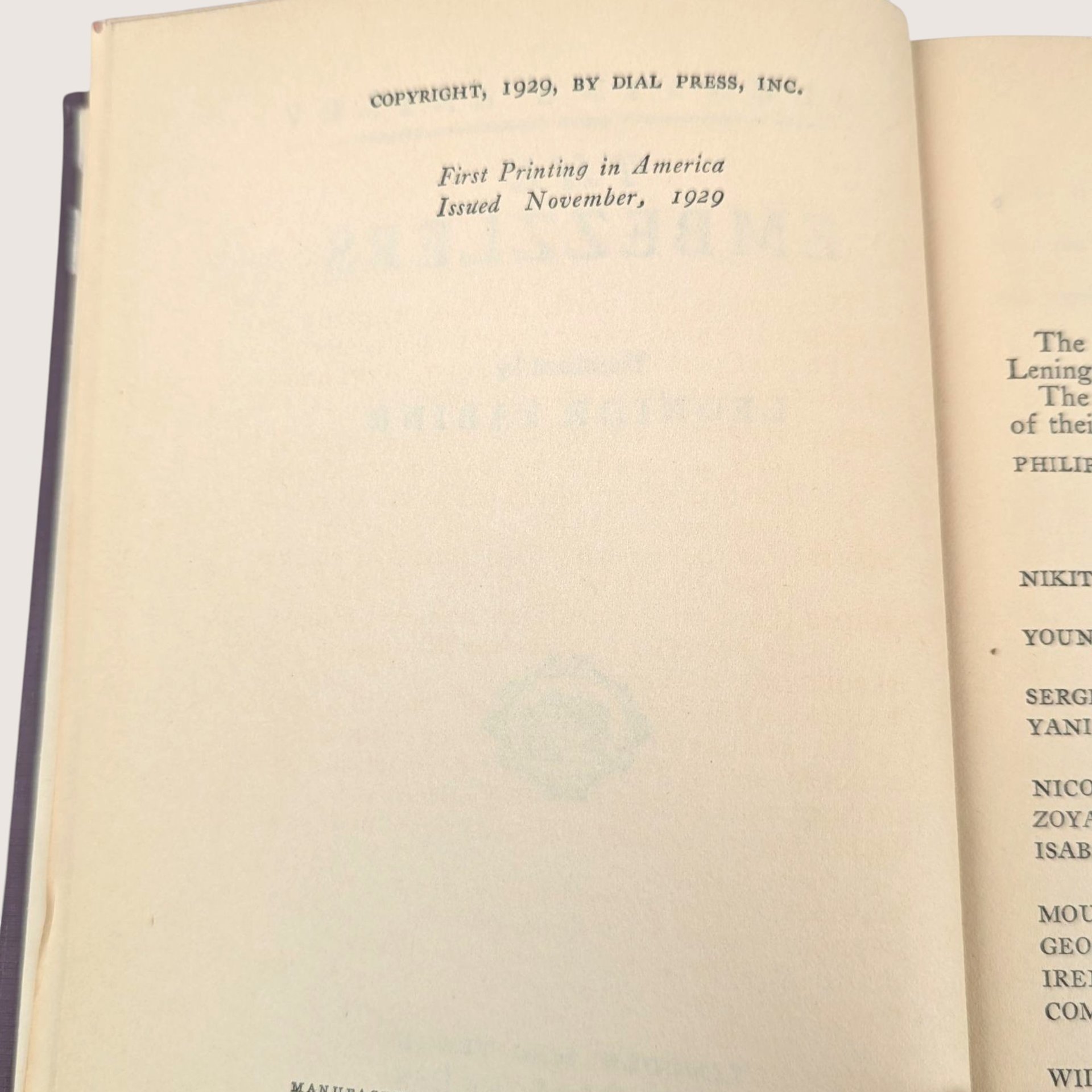
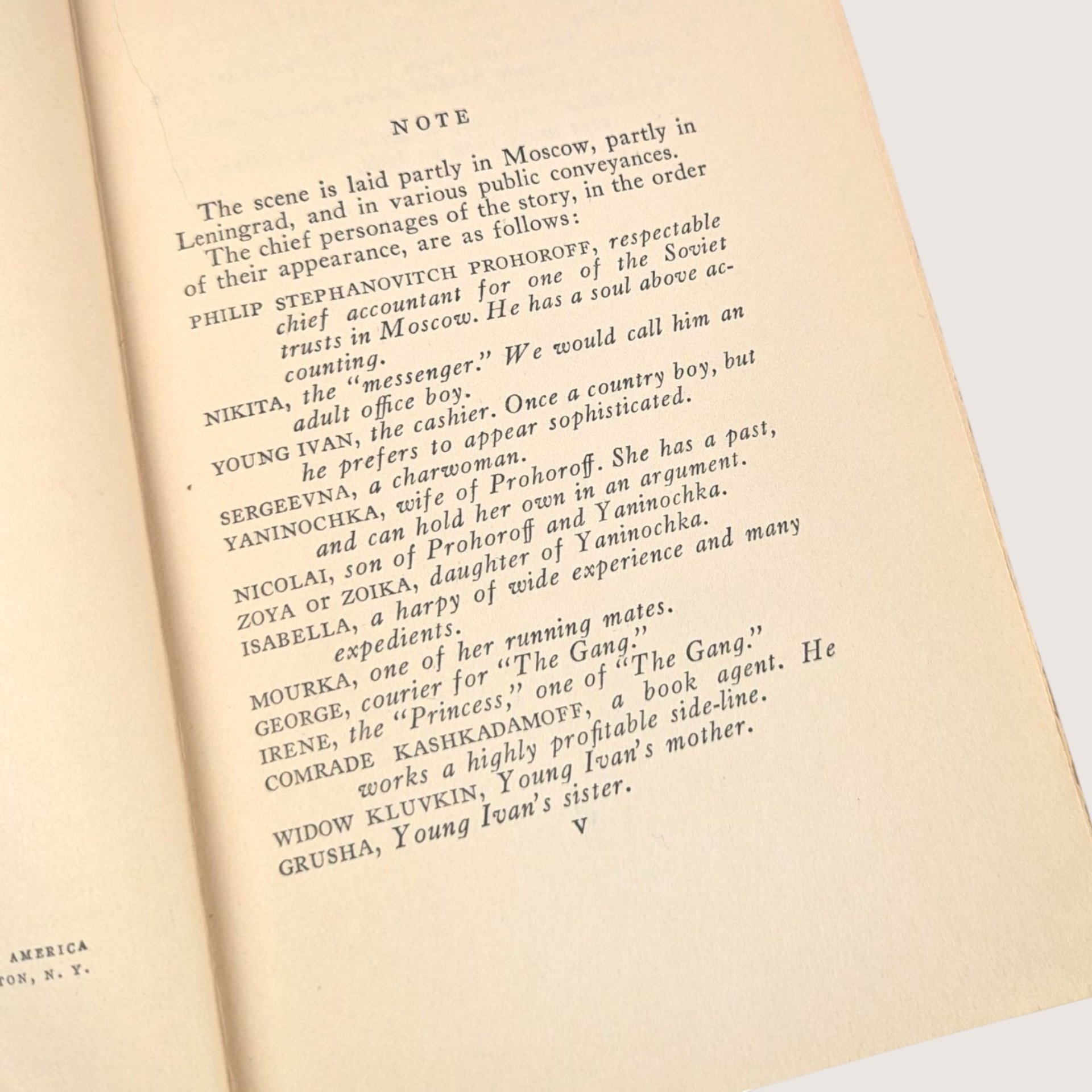
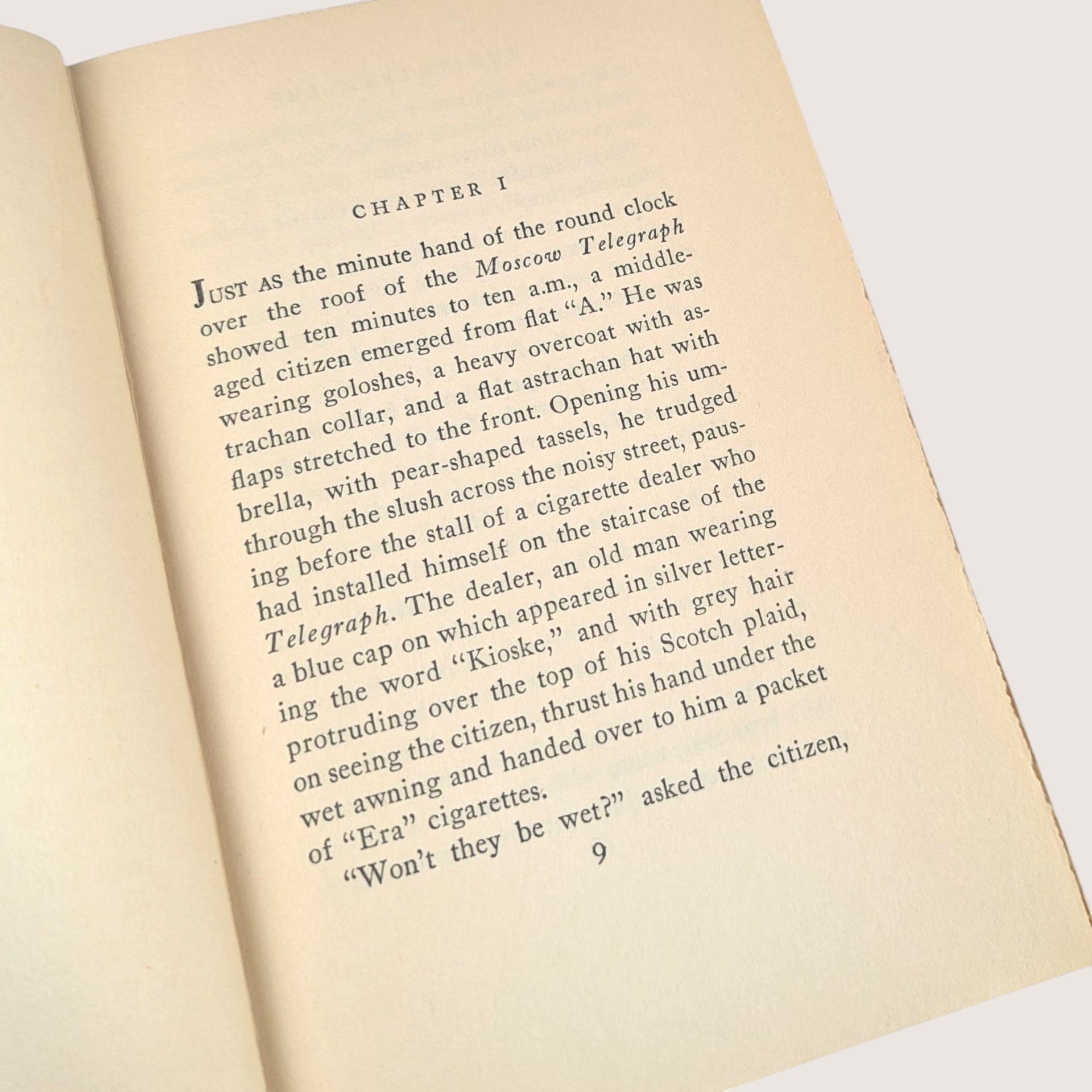
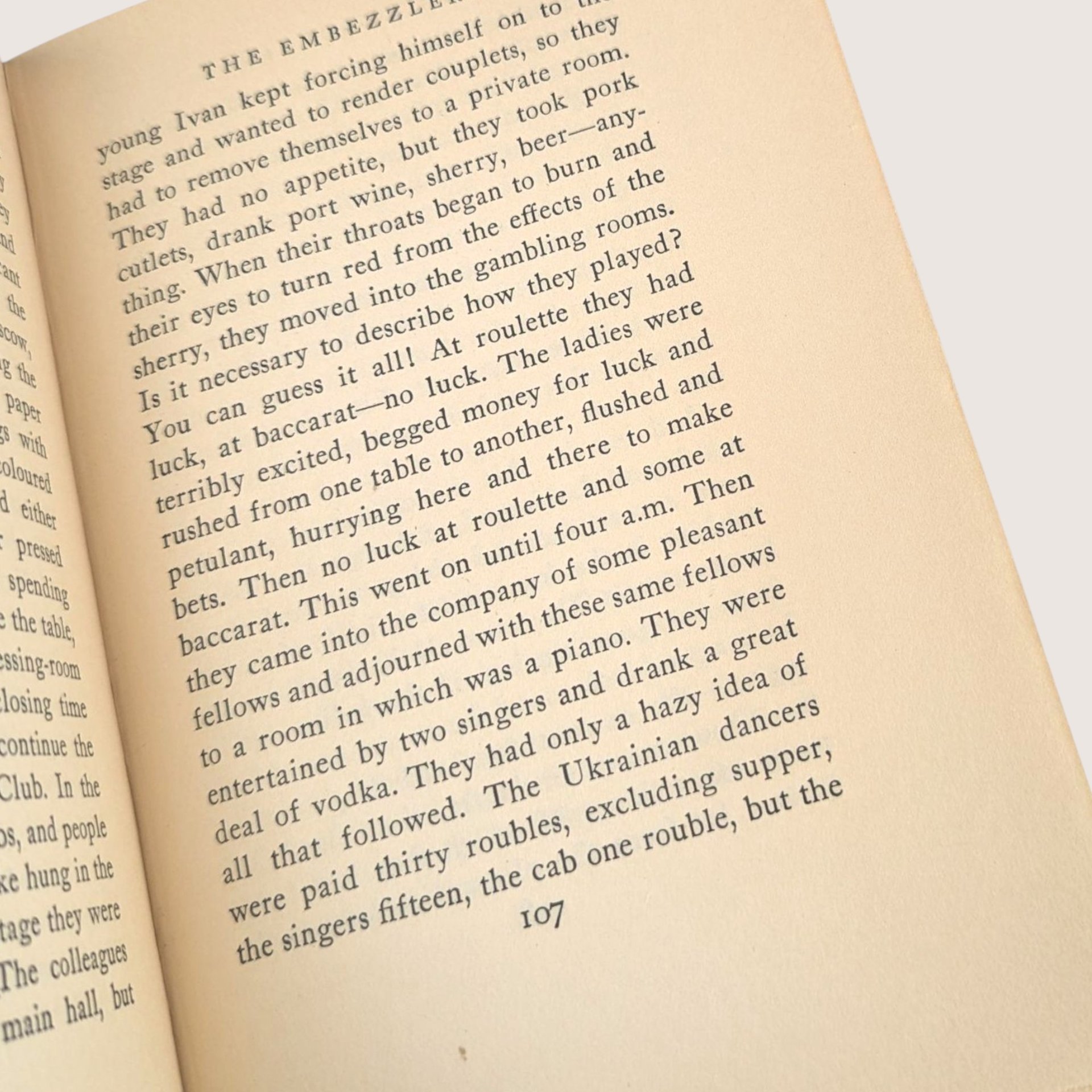
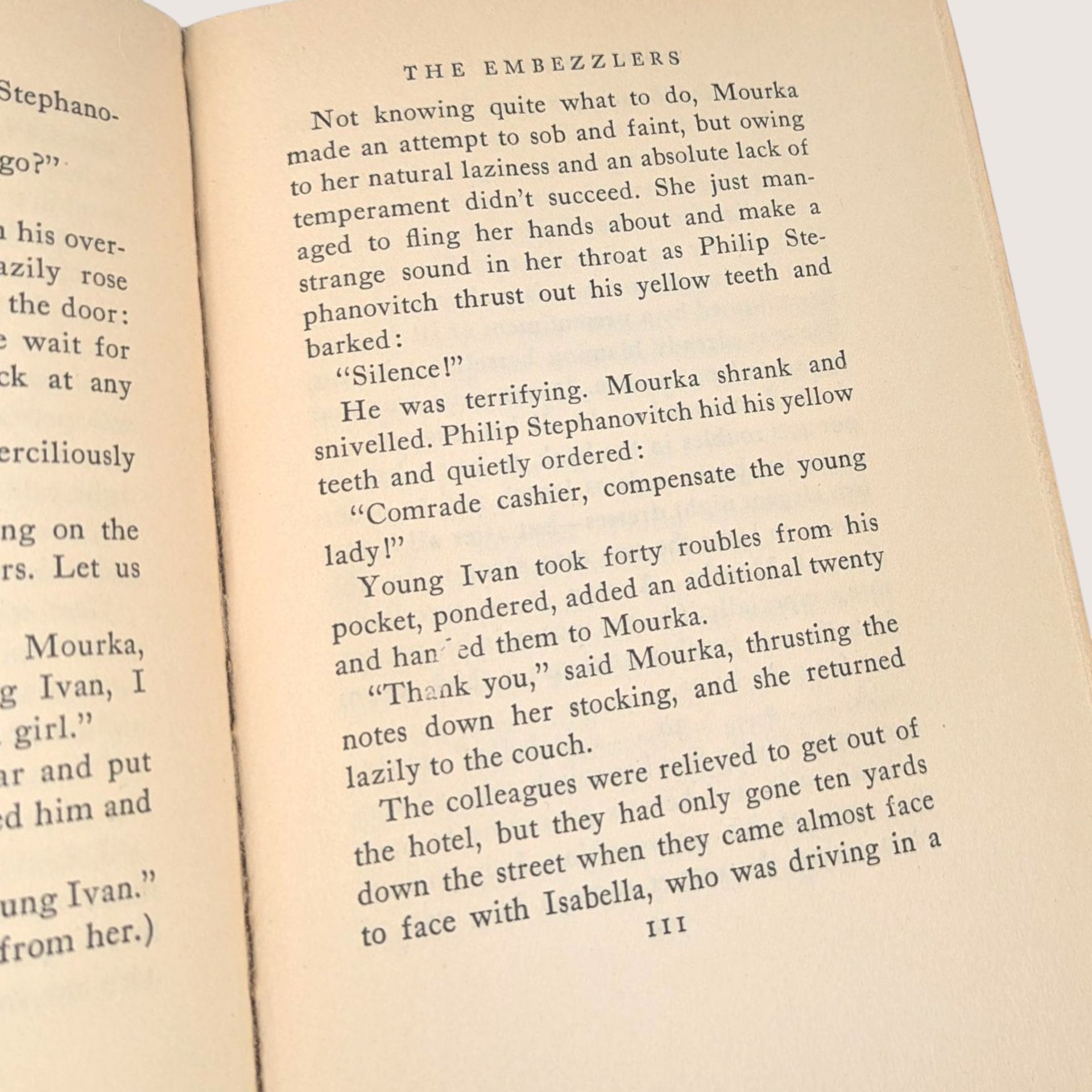
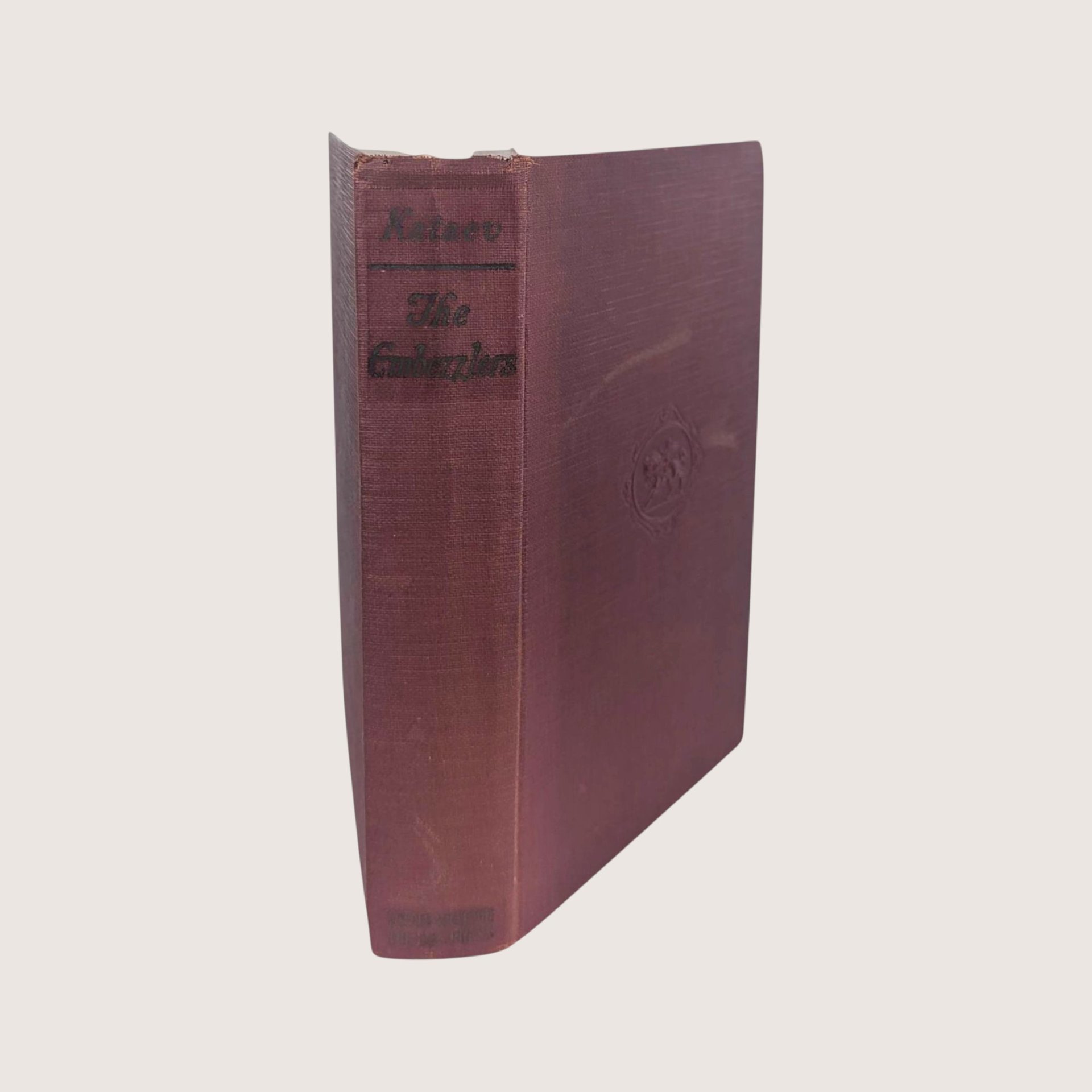


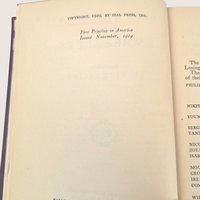
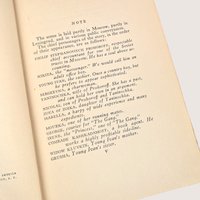



Step into the sharp, satirical world of early Soviet literature with this 1929 first American printing of The Embezzlers, a remarkable survivor for collectors of historic fiction. Translated from the original Russian by Leonide Zarine, this scarce pre-war hardcover volume offers a fascinating, darkly comedic glimpse into the bureaucratic absurdities of the New Economic Policy era.
- Size: 7.5" x 5" (Measurements are close but approximate)
- Decade: 1920s
- Style: Dark Academia / Soviet Satire
- Condition: Good antique condition; the book displays light shelf wear and natural age-toning to the spine and pages, offered without a dust cover
- Extra notes: Spanning 300 pages, this volume features a blind-stamped cover medallion and clean, intact text blocks typical of late 1920s American book manufacturing
Written by Valentine Kataev, a key figure of the post-revolutionary Russian avant-garde and co-founder of the famous Odessa school of writers, this picaresque novel follows two naive Soviet accountants who impulsively steal a payroll chest and embark on a surreal, alcohol-fueled spending spree across Russia. The book was a massive critical success both domestically and abroad, praised by Western contemporaries for its brilliant blend of classic Gogolian realism and modern psychological farce. This structurally sound maroon cloth volume represents an essential artifact from a fleeting window of relative creative freedom in early twentieth-century Russian letters, making it a stellar addition to any specialized literary archive.