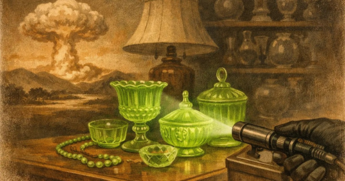

Between the late 1800s and the mid-20th century, glassmakers added a small amount of uranium oxide to molten glass as a colorant. This ingredient created rich,…
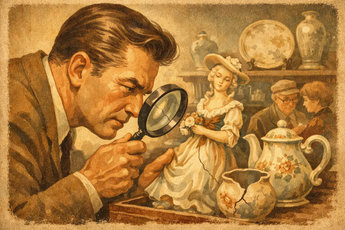
There’s nothing worse than getting a vintage porcelain piece home, only to catch it in the right light and realize that "perfect" handle is actually held together by superglue and prayers.
A professional restoration isn't necessarily a dealbreaker, but it dramatically changes the value and usability of a piece. You absolutely need to know a repair is there so you can pay the right price. Here is how to spot the sneaky fixes on vintage porcelain before you buy.
…
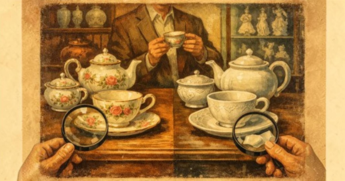
A delicate teacup can feel almost weightless in your hand, while a dinner plate from the exact same era has a reassuring, solid weight to it. Both might be pristine white, beautifully glazed, and stamped with a respected maker's mark—so why does the distinction between bone china and porcelain actually matter?
For vintage lovers and collectors, it comes…
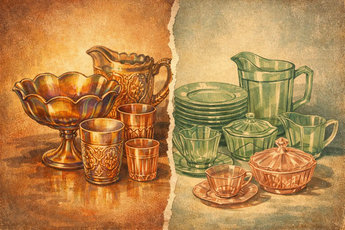
A bowl catches the light in a wash of peacock blue and copper, while a small green plate glows softly beside it. At first glance, both feel like treasures from a grandmother’s cabinet. Yet carnival glass versus Depression glass isn't just a matter of one being shinier than the other.
They stem from two distinct eras in American glassmaking, were made for completely different markets, and…
A book with a softened cloth cover, a faded inscription from a previous owner, or an old map still tucked between its pages carries a presence no new print run can match.…