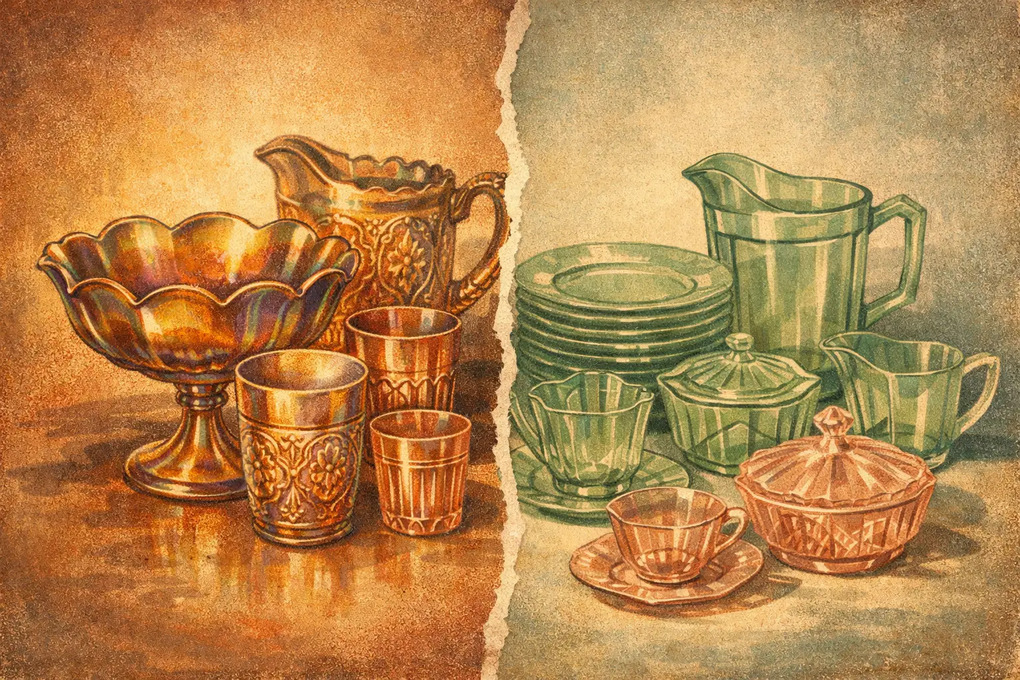
A bowl catches the light in a wash of peacock blue and copper, while a small green plate glows softly beside it. At first glance, both feel like treasures from a grandmother’s cabinet. Yet carnival glass versus Depression glass isn't just a matter of one being shinier than the other.
They stem from two distinct eras in American glassmaking, were made for completely different markets, and bring entirely different moods to a room or a dining table.
What Is the Core Difference?
At its simplest: Carnival glass is all about dramatic iridescence, while Depression glass is all about translucent, cheerful color.
Carnival Glass: The Festive Showpiece
- Era: Peak popularity from 1907 through the 1920s.
- The Process: Made by spraying or applying metallic salts to pressed glass, then refiring it to create a shimmering, rainbow finish.
- The Vibe: Bold, theatrical, and luminous. It was marketed as an affordable alternative to high-end, hand-blown art glass like Tiffany. Beneath that metallic sheen, you’ll find deep molded patterns of peacocks, grapes, scrolls, and geometric rays.
- Key Colors: Marigold (orange-gold) is the most common, but deep amethyst, cobalt, ice blue, and emerald are prized finds.
Depression Glass: The Daily Comfort
- Era: Flourished from the late 1920s through the 1940s.
- The Process: Machine-pressed, transparent colored glass made to be sold cheaply or given away as promotional items during tough economic years.
- The Vibe: Democratic, practical, and nostalgic. Depression glass rarely has an iridescent coating—its appeal lies in its soft translucent colors and sweet, repeatable patterns (like Cameo, Princess, or Mayfair).
- Key Colors: Soft pink, canary yellow, amber, cobalt, and "uranium" green.
How to Spot Them in the Wild
When you’re digging through an estate sale or antique booth, use these three visual checks:
- Test the Surface Light: Tilt the piece toward a window. If the color shifts like oil on water (flashing blue, violet, rose, and gold), it’s carnival glass. If the color stays completely solid and uniform as light passes through it, you're looking at Depression glass.
- Look at the Shape: Carnival glass leans heavily toward display pieces (ruffled bowls, pedestal compotes, punch bowls, and vases). Depression glass leans toward full table service (cups, saucers, dinner plates, creamers, and salt shakers).
Spotting Wear & Value
Condition dictates whether a piece belongs on your dinner table or purely on a display shelf:
- Checking Carnival Glass: Watch for worn iridescence, cloudy film, or heavy scratches that dull the metallic luster.
- Checking Depression Glass: Look for utensil marks, rough mold seams, hairline cracks near handles, and clouding in the glass.
- Skip the Flawless Trap: A tiny chip on a ruffled rim doesn't ruin a display piece! However, damaged or heavily worn vintage glass is best kept for display (like an entryway key catchall) rather than everyday food and drink.
Styling Ideas for Your Home
- Where Carnival Glass Shines: Place a ruffled carnival bowl near a window, on a mantel, or next to aged brass candlesticks. Its metallic finish loves natural sunlight and deep, dramatic backdrops.
- Where Depression Glass Shines: Mix pink or green Depression glass plates with crisp white ironstone, open wooden shelving, or soft linen napkins for a breezy, cottage-inspired feel.
The Takeaway
Choose carnival glass when you want a rich, luminous accent piece that acts as its own art object. Choose Depression glass when you want approachable, colorful charm for your open shelving or weekend dessert table.
Neither category is automatically "more valuable"—the best piece is simply the one whose color and history make you pause.
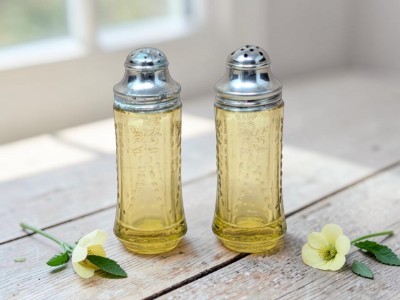
1930s Federal Glass Madrid Amber Depression Glass Salt and Pepper Shakers
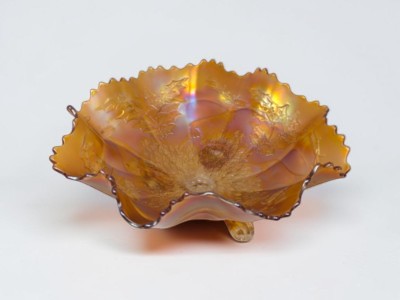
Antique Fenton Marigold Chrysanthemum Carnival Glass Footed Bowl
Now that we've explored some differences in glass maybe you want to take a look at Bone China Versus Porcelain: What Collectors See, Sometimes it can be hard to tell the difference,