
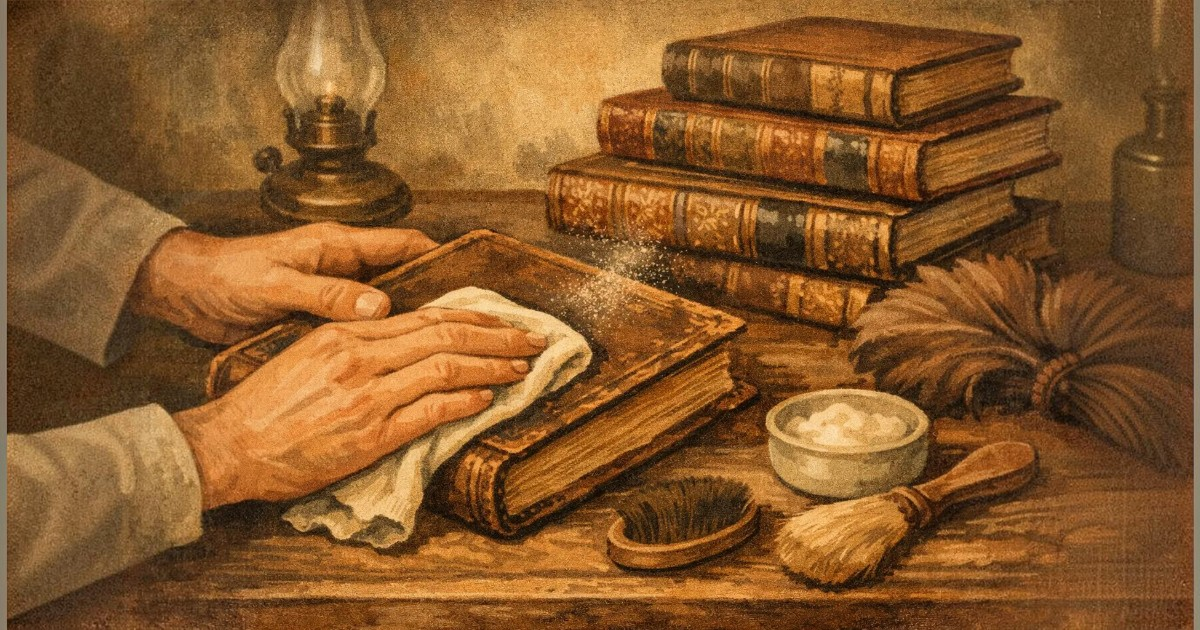
A century-old vintage book does not need to look newly printed to be beautifully kept. Its softened cloth, foxed page edges, penciled inscription, or modest shelf wear are all part of the object’s history. Learning how to clean vintage and antique books is less about making them pristine and more about removing what is harmful while leaving their honest character intact.
Old books can be unexpectedly sturdy, but their materials are rarely forgiving. Leather can crack, gilt can rub away, paper can tear at a thumb’s pressure, and an attempt to erase a mark or brighten a cover can do more harm than a hundred quiet years on a shelf. Work slowly, clean only what you can clearly identify, and reserve ambitious repairs for a qualified book conservator.
Before You Clean a Vintage or Antique Book
Choose a dry, uncluttered table away from food, drinks, direct sun, and open windows. Wash and dry your hands well. For most ordinary handling, clean bare hands are preferable to gloves because they provide better control of delicate pages. Nitrile gloves are useful if you suspect mold, residue, or insect activity.
First, look at the book closely without opening it too far. Note loose boards, detached spines, brittle pages, flaking leather, damp staining, and crumbling paper. A vintage book with cracked hinges can often still be enjoyed, but it should be supported rather than pressed flat. If a page feels stiff, sticks to its neighbor, or seems ready to split, do not try to separate it.
Equally important, decide whether you are seeing ordinary age or an active problem. Brown freckles called foxing are common on old paper and are usually stable. They are not something to scrub away. A musty odor alone may indicate years of storage, but fuzzy, powdery, or velvety growth in white, gray, green, black, or orange can be active mold. In that case, isolate the book in a dry container or bag and seek professional advice before bringing it near the rest of your collection.
How to Clean Vintage and Antique Books: Begin With Dry Dusting
For the great majority of collectible books, dry surface cleaning is the right approach. You need a soft natural-bristle brush, such as a clean artist’s brush or makeup brush reserved only for this task, along with a clean microfiber cloth for the work surface. A low-suction vacuum fitted with a brush attachment can help with sturdy, heavily dusty volumes, but it should never touch the book itself.
Keep the book closed and hold it securely. Brush the top edge of the text block first, moving dust away from the pages and onto the table rather than into the book. Then clean the fore edge and bottom edge. Dust settles most heavily along the top, particularly on books displayed upright without a protective case.
After the page edges, gently brush the front cover, back cover, spine, and the shallow channels beside the spine. Use light strokes directed away from the joints. When working around gold stamping, paper labels, decorative pastedowns, or an illustrated cloth cover, use almost no pressure. The goal is to lift loose dust, not polish the surface.
If the book is sound and the dust is thick, hold a vacuum nozzle several inches away while you brush. The vacuum should draw airborne dust from the area, not pull at the paper or binding. Skip the vacuum altogether for books with loose fragments, a powdery cover, or fragile edges.
Open the Book With Support
A tight, old binding should be opened gradually. Rest the closed book on the table, ease the front cover down, then the back cover, and gently turn a few pages at a time from each side toward the center. This gives the spine a chance to flex naturally.
Brush only a few pages at once, beginning near the gutter and moving outward. Never force the pages flat, lick a finger to turn them, or tug at a folded corner. A clean sheet of plain white paper beneath the page you are examining can make loose debris easier to see and catch.
Treat Covers According to Their Material
Antique and vintage book covers are not all cleaned the same way. Cloth, leather, vellum, paper-covered boards, and decorative bindings each have different vulnerabilities. When in doubt, do less.
Cloth-Bound Books
Many nineteenth- and early twentieth-century volumes are cloth-bound books, sometimes embossed or decorated with gilt. After brushing, a nearly dry microfiber cloth may be used very lightly on a stable, unprinted area of plain cloth. Do not use water, furniture polish, or household cleaning spray. Moisture can leave tide marks, loosen adhesive, and make dyes bleed.
A white vinyl eraser or archival dry-cleaning sponge is sometimes used by experienced collectors to lift small areas of surface grime. Test in a discreet corner first, and stop if fibers lift, color transfers, or the cloth looks lighter. Avoid erasers on gilt, printed decoration, paper labels, and worn corners.
Leather Bindings
A mellow leather spine and marbled boards have a presence that no modern reproduction quite captures. They also need restraint. Dust leather with a soft brush, then leave it alone unless there is a specific conservation reason to intervene.
Do not apply saddle soap, oil, wax, petroleum jelly, or commercial leather conditioner to an antique binding. These products can darken leather, attract dust, stain adjoining materials, or alter the book’s collectible condition. Red, rusty-looking powder on leather may be red rot, a form of deterioration that needs professional assessment. Keep the book supported and avoid rubbing the affected area.
Paper, Vellum, and Delicate Decorative Covers
Paper-covered books, pamphlets, and illustrated boards are especially easy to damage. Brush them lightly and resist the temptation to erase stains, tape torn corners, or wipe away discoloration. Vellum can warp in changing humidity, while old paper can become brittle even when it looks clean. A protective archival enclosure is often a wiser next step than further cleaning.
What Not to Use on Old Books
The quickest way to reduce a vintage book’s charm and value is to treat it like a modern hardback. Keep these common products and methods away from antique volumes:
-
Water, damp cloths, disinfecting wipes, and steam
-
Bleach, vinegar, alcohol, hydrogen peroxide, and household cleaners
-
Furniture polish, leather oil, wax, and scented sprays
-
Tape, glue, rubber bands, paper clips, and sticky notes
-
Aggressive erasers or scraping tools used on stains and foxing
Water-based cleaning can swell paper and encourage mold. Chemical cleaners may bleach color or weaken fibers. Even seemingly harmless tape becomes brittle and yellow over time, leaving adhesive stains that are far harder to remove than the original tear.
When Stains, Odors, or Insects Need More Than Cleaning
Some conditions call for preservation rather than a home remedy. Water stains, ink, mildew, smoke odor, and insect damage can be tempting problems to solve, especially on a cherished family Bible, a decorative Victorian gift book, or a handsome early edition found at an estate sale. Yet these issues often sit within the paper and binding, not on the surface.
For a mild old-book odor, give the volume time in a clean, dry room with gentle air circulation, out of sunlight. Do not spray it with fragrance or place dryer sheets between the pages. If the smell is strong, smoky, or moldy, isolate the item from other books. Activated charcoal or odor absorbers may be placed nearby in a closed storage container, but never directly against the book, and only after you are confident there is no active mold.
Small round holes, powdery debris, or visible insects deserve attention as well. Seal the book away from the collection and consult a conservator or experienced archival specialist. Do not use insecticide on the book. A professional can advise whether controlled freezing or another treatment is appropriate for its materials and condition.
A conservator is also the right choice for detached covers, loose gatherings, valuable inscriptions, hand-colored plates, parchment leaves, and books with significant market or family value. A sympathetic repair should stabilize the object without disguising its age or replacing evidence of its past.
Keep a Clean Book Clean
Once dusted, store vintage books upright with gentle support on both sides, neither crammed tightly nor left leaning at a sharp angle. Large, heavy books are usually safer stored flat in short stacks. Keep them away from radiators, exterior walls, basements, attics, and sunny windows, where swings in heat and humidity invite warping, fading, and mold.
A stable living space is generally better than a dramatic storage solution. Dust shelves regularly, leave a little breathing room around volumes, and inspect treasured books seasonally. For particularly fragile or decorative pieces, an archival box or fitted protective jacket can preserve a cloth cover, leather spine, or illustrated boards without hiding the details that made you choose it.
The most satisfying vintage books are not the ones scrubbed free of every mark. They are the ones cared for closely enough that the next reader can still feel the texture of their age, open them safely, and find the story waiting inside.
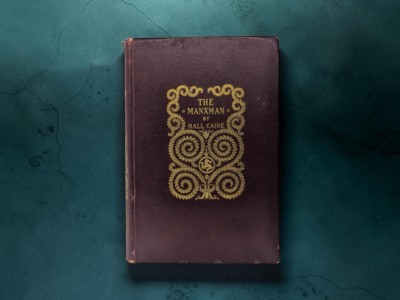
Pictured: Antique 1895 The Manxman Hall Caine Hardcover Book